
Privacy Policy
Last updated October 1, 2026
1. Who we are and what this policy covers
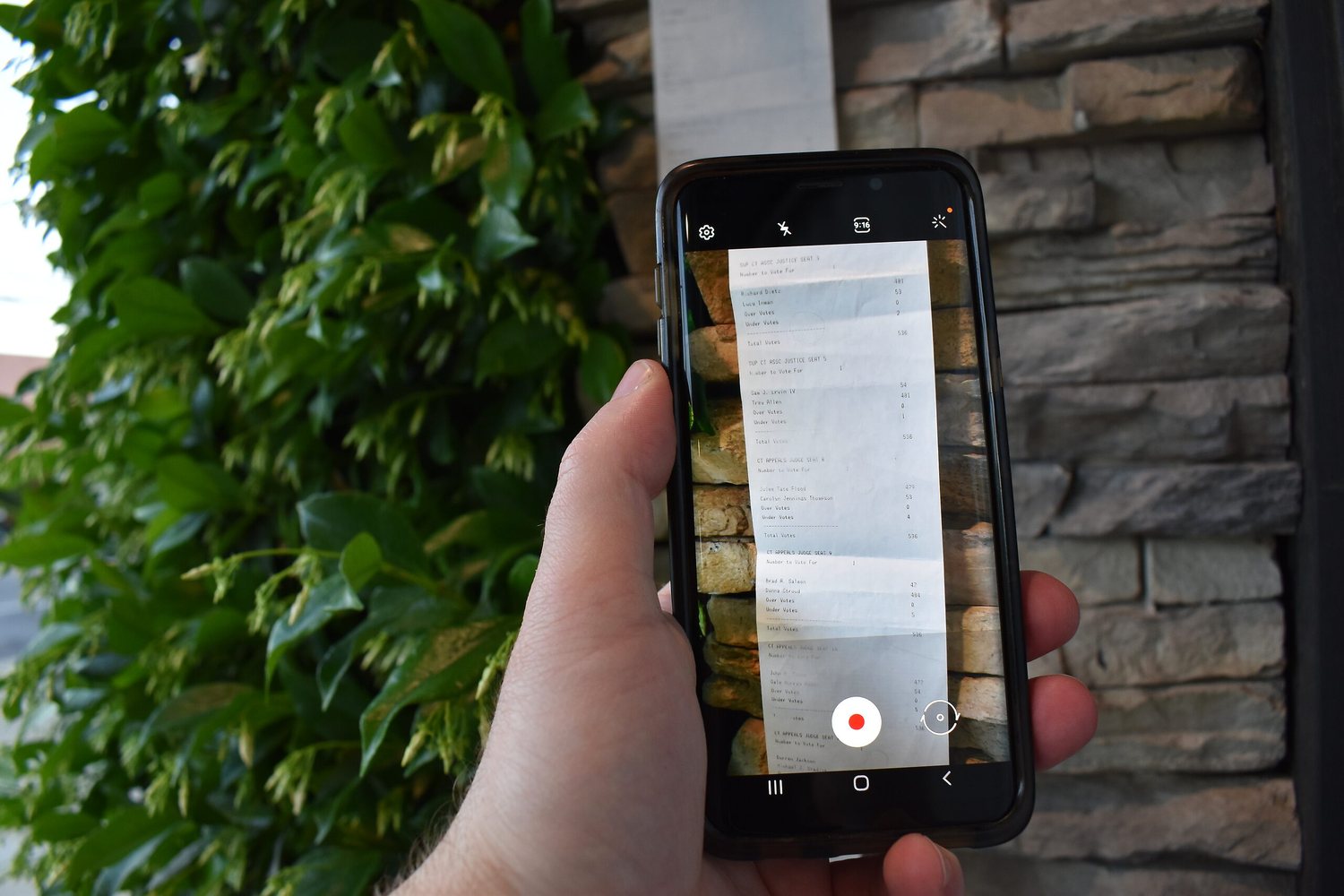
America Counts is an initiative of Democracy Counts, Inc., a 501(c)(3) non-profit, non-partisan corporation. We build and operate Actual Vote, a free mobile application and supporting backend infrastructure that lets Americans independently verify how their local votes are reported. Volunteers use the Actual Vote app to record paper poll tapes; the recordings are uploaded to our backend, vetted, and used in published Actual Vote reports on vote-reporting accuracy in elections around the country.
This Privacy Policy describes how we collect, use, share, and retain information when you use any of the following:
- The Actual Vote mobile application for iOS and Android.
- The public archive at av.democracycounts.org, where approved submissions are made publicly available.
- Our main website at americacounts.us.
- Any other services we operate that link to this policy.
We use the words “we,” “us,” and “our” throughout to refer to America Counts and Democracy Counts together. We use “you” to refer to the person reading the policy and using our services.
This policy is one of four documents that together describe your relationship with us:
- The Actual Vote User Agreement is what you affirmatively agree to before using the Actual Vote app. It sets out the basic terms of use.
- This Privacy Policy is the formal statement of what we do with your data and what rights you have regarding it.
- The Health, Safety, and Practicality Statement covers safety in the field, health and communicable illness, what to expect from the methodology, and what we can and cannot guarantee.
- Using Actual Vote is a practical guide and tutorial you can read or consult at any time.
When you create an account, you affirmatively agree to the Actual Vote User Agreement — the formal contract between you and America Counts. You also confirm that you have been given the opportunity to review this Privacy Policy and the Health, Safety, and Practicality Statement; the User Agreement incorporates relevant terms from those documents by reference. The fourth document, Using Actual Vote, is available for reading or consultation; it is not part of the agreement. The four documents are designed to work together; if you only read one, this is probably the right one.
2. The short version
We collect three main categories of information about you:
- Account information — limited to your email address and display name, which we receive from Google when you sign in. We do not ask you for a password, because we use Google Sign-In for authentication.
- Submissions you upload to us (the video recordings of poll tapes and the metadata that comes with them, including the GPS coordinates of where the recording was made).
- Operational data generated automatically as you use our services (server logs and telemetry from our website and upload service, and the records we create as we vet, transcribe, and analyze your submissions).
The most important things to know about how we handle this information are:
- Approved submissions become public. When you upload a recording, it goes through a vetting process. If it passes vetting, it is published to our public archive at av.democracycounts.org, where anyone in the world can view it. This is a fundamental feature of our methodology, not an incidental data-handling choice. Once a submission is in the public archive, it is publicly accessible globally and indefinitely. Our archive does not block search-engine indexing, so approved recordings can appear in Google and other search results.
- Submissions are published without your name or email attached. Approved submissions in the public archive do not display the submitter’s name, email, or any other identifying information to members of the public. Your identity as the submitter is retained in our internal records for chain-of-custody purposes, but it is not shown on the archive.
- Submissions are evidence. The recordings you submit are forensic evidence that could be used in legal proceedings to challenge or vindicate official election results. We retain submissions and the chain-of-custody data around them with this evidentiary use in mind. In the rare case that a submission becomes the subject of litigation, you (as the person who recorded it) could be asked to confirm in court that you took the video.
- You should never include private information in a submission. Our vetting process is conducted by humans and is not perfect. If you record audio that contains sensitive personal information — yours or someone else’s — there is a real chance it could end up in the public archive accidentally. Don’t say anything personal while recording, and don’t record other people’s faces, voices, conversations, or license plates.
- We do not sell your data. We do not share user data with data brokers, advertising networks, or marketing companies. We are funded by donations, not by monetizing user data.
- You have rights. Depending on where you live, you may have rights under laws like the California Consumer Privacy Act or the European General Data Protection Regulation to access, correct, or delete information about you. We honor these rights and the procedure for exercising them is described in Section 9.
The rest of this policy walks through each of these points in detail.
3. What we collect
3.1 Information associated with your account
Actual Vote does not have its own username-and-password system. Authentication is handled entirely by Google Sign-In (OAuth 2.0). When you sign in for the first time on either the mobile app or the website at av.democracycounts.org, Google authenticates you and returns a signed identity token to us. We use that token to create an account record that contains:
- Your email address, taken from the Google token. This is the identifier we use to tie your submissions on the mobile app to your account on the website.
- Your name and display name, also taken from your Google profile.
- An internal role (by default, “Volunteer”), which controls what you can see and do on the website.
- Audit timestamps (account creation, most recent modification).
We do not ask you to create a password, and we do not store one. We do not ask you for a phone number, a physical address, a photo, a real name beyond what Google provides, or any other profile field. The first time you sign in on each platform we create the account record automatically; there is no separate sign-up form.
Because authentication is delegated to Google, your Google account is subject to Google’s own privacy terms, which are outside our control. You can revoke Actual Vote’s access to your Google account at any time through your Google account settings.
3.2 Information you provide when you submit a recording
When you record a poll tape with Actual Vote and upload it to us, we collect:
- The video file itself, including its audio track. The app records using your device’s native camera, muxes audio and video into a single file (H.264/AAC
.mp4on Android; HEVC or H.264.movon iOS), and does not perform any noise suppression, voice filtering, or other audio preprocessing. Audio and video are not transmitted as separate streams. On iOS, files larger than 100 MB are compressed for upload using a medium-quality preset. - GPS coordinates, captured once by your device after recording ends, at “medium” accuracy (typically 100–1000 meters depending on the device and its GPS fix), with a ten-second timeout. The coordinates are stored as raw decimal degrees; they are not rounded or fuzzed. If the GPS fix fails or times out, the submission continues without location data. Location capture requires the “Location While Using the App” permission, which you are asked for on first launch; you can revoke it later in your device settings, after which the app will continue to work but submissions will have no location attached.
- A reverse-geocoded address derived from the GPS coordinates (street-level address, city, county, state, postal code, country), produced by the operating system’s own geocoding service.
- Timestamp. The date and time the recording was created, captured by your device.
- Precinct identifier and any other text you add to the submission. The app asks you to enter the precinct code; this and any other text you add are stored with the submission.
- App and device metadata — specifically: the Actual Vote app version and build number, device model, manufacturer, device name, operating system version, platform (Android or iOS), device type (phone or tablet), and whether the device is physical or virtual.
The GPS coordinates are part of the submission and are essential to the methodology — they let us verify that the recording was made at a real polling place and correlate the recording with the official precinct it came from. There is currently no way to submit a recording without GPS coordinates being captured if your device has location enabled. If you do not want your location captured at the time of recording, you should not use Actual Vote at that location.
What we do not collect from your device. We do not collect a device serial number, IMEI, phone number, mobile carrier, Wi-Fi network name (SSID), battery level, advertising identifier, or any similar identifier. The app does not include any analytics or crash-reporting SDK (no Firebase, no Sentry, no App Center, no Crashlytics, no similar service) and does not send any usage telemetry to us in the background. The only data the app transmits to our servers is the submission itself when you choose to upload it.
On iOS, the app also saves a copy of the recording to your device’s Photos library (requiring the “Add to Photos” permission). This copy is entirely on your device — we do not receive it unless you upload the submission through the app. On Android, the system camera app typically saves a copy to your gallery as part of the capture flow.
3.3 Information we generate about your submissions
As we process your submission, we create additional records about it. These records include:
- Vetting records. Our vetters review each submission and decide whether it can be approved (transcribable, no apparent personal information, suitable for publication) or rejected. We record the vetting decision, the date and identity of the vetter, and any notes the vetter adds.
- Transcriptions. Our analysts transcribe the contents of approved submissions into structured data — the contests, choices, and vote totals shown on the poll tape. The transcription dataset is associated with the original submission.
- Comparison results. When we compare transcribed values against officially reported results, we create comparison records that show whether each value matched, did not match, or required investigation.
- Investigation history. When a comparison is investigated, we record the steps of the investigation and its outcome.
- Access logs. We log access to our website and upload service at the request level (see Section 3.4). We do not currently maintain a per-record access log showing which specific admin viewed which specific submission; this is an honest limitation of the current system.
These derived records are part of the chain of custody for the submission. They support the evidentiary use of the submission described in Section 6. They are also part of how we maintain the methodological integrity of our work.
3.4 Information collected automatically when you use our services
From the mobile app. Apart from the contents of submissions you choose to upload, the mobile app does not send information to our servers in the background. We do not operate any analytics or telemetry pipeline for the app. Apple and Google collect their own platform-level crash reports and diagnostic data from all apps distributed through their stores — these reports contain device model, OS version, app version, and crash stack traces, and are accessible to us through App Store Connect and Google Play Console. They do not contain the content of your submissions or personal account information beyond what the OS itself attaches. You can opt out of these platform-level reports in your device’s Settings (iOS: Privacy → Analytics & Improvements; Android: Settings → Google → Usage & Diagnostics).
We run two separate web properties on different infrastructure, and what is collected differs between them. They are described separately below.
From our public website (americacounts.us). This site is a set of static pages — the marketing, guidance, and published-report material — hosted by Vercel. It has no user accounts and no sign-in. As with any web host, Vercel receives the requests your browser makes in order to serve the pages, and its operational logs record request data including your IP address and User-Agent string; that processing is governed by Vercel’s own privacy terms. We do not use those logs to build any profile of you. We run no analytics on this site of any kind: no Google Analytics, Plausible, Matomo, or equivalent, no Vercel Analytics or Speed Insights, and no page-view, click, or scroll tracking.
From the archive and the upload service. The public archive at av.democracycounts.org and the service that receives uploads from the mobile app are hosted on Azure and use Azure Application Insights, Microsoft’s server-side telemetry tool. Application Insights records, for each request those servers receive: the URL or endpoint requested, the response status code, how long the request took, any exception that occurred, and the timestamp. The request record also captures your IP address and your browser or app User-Agent string. We retain this telemetry for ninety days. We do not run any client-side JavaScript analytics there either.
Cookies and local storage. The archive at av.democracycounts.org sets two first-party cookies, both strictly functional:
- A persistent ASP.NET authentication cookie that keeps you signed in.
- A short-lived external-OAuth cookie that carries you through the Google sign-in redirect.
On the public website at americacounts.us we set no cookies at all. It writes a single strictly-functional item to your browser’s local storage — a display-theme preference — which never leaves your device and identifies nothing about you.
Third-party content. Neither site sets analytics, tracking, advertising, or third-party cookies, and neither embeds third-party content — no YouTube, Vimeo, social-media widgets, Facebook Like buttons, Twitter cards, or externally hosted fonts — that could drop cookies or record a request of its own. Our brand typefaces are served from our own domain rather than from Google Fonts, specifically so that opening a page here does not disclose your IP address to a third party. (This was not true before August 2026: the site loaded its fonts from Google’s servers, which meant Google received a request, and therefore your IP address, whenever you opened a page. We now self-host them.) The only external resource your browser loads is Google’s own OAuth page, when you click Sign In on the archive. Links to other organizations’ sites — the app stores, our blog, our donation providers — are ordinary links and load nothing until you click them.
We do not display a cookie-consent banner because the cookies and storage we use are limited to those strictly required for authentication and display.
3.5 Information you provide when you donate
Donations to Democracy Counts are processed through PayPal and through Venmo, a PayPal service. Both are hosted checkouts run by the provider, not by us: when you choose a donation method on our Donate page — by clicking a donation button, by scanning the PayPal QR code with your phone, or by sending to our Venmo profile in the Venmo app — you complete the donation inside PayPal’s or Venmo’s own interface. We do not run the checkout ourselves and we do not see or store your full payment details (your card number, your bank information, or your PayPal or Venmo credentials). Those are handled by PayPal under PayPal’s own privacy policy.
What we do receive, after a successful donation, is a notification of the donation along with whatever donor information the provider forwards to recipients — typically your name or profile handle, the donation amount, the donation date, a transaction identifier, and, in PayPal’s case, your email address. The precise set of fields is determined by PayPal or Venmo, not by us. We use that information to send you a thank-you and a tax receipt, to comply with IRS recordkeeping requirements for tax-deductible charitable contributions, and to comply with state charitable-solicitation registration requirements where applicable.
If you are concerned about what specific information PayPal or Venmo will share with us when you donate, please consult that provider’s privacy disclosures or contact us before donating.
3.6 Information we receive from third parties
Apart from the identity information Google sends us when you sign in (Section 3.1) and the donation information PayPal sends us when you donate (Section 3.5), we do not receive user information from outside sources. We do not buy data, we do not receive mailing lists, and we do not ingest information about you from partner organizations or social media platforms.
4. How we use your data
We use the information described in Section 3 for the purposes described below.
4.1 To operate the Actual Vote methodology
The core purpose of our data collection is to operate the Actual Vote audit methodology. This involves:
- Vetting submissions to determine whether they can be published.
- Publishing approved submissions to the public archive at av.democracycounts.org.
- Transcribing the vote totals shown in submissions into structured data.
- Comparing transcribed values against officially reported results.
- Investigating any comparisons that do not match.
- Publishing analyses and reports based on our findings.
4.2 To preserve evidentiary integrity
The recordings you submit are forensic evidence about how votes were locally reported in your election. We retain submissions, their metadata, the vetting record, the transcription, the comparison output, the investigation history, and the server-level request logs in a form that supports authentication and use of the submission as evidence in possible future legal proceedings.
This use is described in more detail in Section 6 (Your Submissions as Legal Evidence). We mention it here because it is one of the central reasons we collect and retain the information described in Section 3, and we want it to be clear that the evidentiary use is by design rather than incidental.
4.3 To communicate with you
We use your email address to communicate with you about:
- Status of your submissions and responses to questions you raise.
- Support requests you initiate.
- Optional newsletters and updates about America Counts’ work, if you have opted into receiving them.
We do not send password-reset emails, because there is no Actual Vote password to reset; sign-in is entirely through Google.
You can opt out of optional communications at any time using the unsubscribe link in any newsletter or by contacting us. We will continue to send you essential communications related to your submissions even if you opt out of optional ones.
4.4 To process donations
If you make a donation, we use the donor information PayPal forwards to us to send you a tax receipt and to maintain the records the IRS and applicable state charitable-solicitation laws require us to keep. We do not use this information to market to you. We do not pass it to any third party other than what is required for tax compliance.
4.5 To improve our methodology and our services
We use aggregated information about how our services are used to identify problems, improve performance, refine our methodology, and develop new features. This use is internal to Democracy Counts and does not involve sharing information with advertising networks, behavioral-targeting providers, or marketing companies.
4.6 To comply with law and protect rights
We may use information about you to comply with legal obligations, respond to lawful legal process, protect the safety of our users or the public, prevent or investigate fraud or abuse, and protect the rights and property of Democracy Counts and others. This use is rare in practice but we want to be honest that it is one of the things we may do with the information we collect.
5. What becomes public
This section describes the part of our operations that is most different from typical online services. When you submit a recording to Actual Vote, the recording is intended to be published — that is the point of the methodology. Public access to the submitted recordings is a feature, not an accident.
5.1 The public archive
Submissions that pass vetting are published to the public archive at av.democracycounts.org. Anyone with an internet connection can view the recordings, search the archive by state, county, date range, analysis result, or report name, and download the videos. There is no login requirement to access published submissions.
The archive is not configured to block search-engine crawlers — there is no robots.txt exclusion and no noindex tag on the public pages. This means that approved submissions can be indexed by Google and other search engines, and can appear in search results returned to anyone searching for the polling place, the precinct, or related terms. You should assume, when you submit a recording, that if it is approved it may eventually surface through search engines as well as through the archive itself.
5.2 What is not shown publicly
Approved submissions in the public archive do not publicly display:
- Your email address.
- Your name or display name.
- Your Google account identifier.
- Any other identifying information about you as the submitter.
The archive displays the recording itself, the location information associated with it (polling place, precinct, geocoded address, GPS coordinates), the date, and the analytical records we have attached to it (transcription, comparison, any investigation notes). The “created by” field that identifies the submitter is visible only to authenticated administrators inside our own system. Other signed-in volunteers cannot see who submitted a given recording, and members of the public cannot see it at all.
Your identity as the submitter is retained in our internal records, tied to your email address, for chain-of-custody purposes (Section 6). But it is not published.
5.3 What the vetting process catches and what it doesn’t
Our vetting process is conducted by humans. A vetter reviews each submission and approves it for publication if it appears to be a transcribable poll tape recording without personally identifying information visible in the video or audible in the audio. Submissions that contain personal information, that are not transcribable, that are off-topic, or that are otherwise unsuitable for publication are rejected.
The vetting process is not perfect. We try our best, but humans make mistakes and we cannot listen to all of the audio on every recording. There is a real chance that a submission containing personal information could be approved by accident and end up in the public archive. You should never include personal information of any kind in a submission. This means:
- Don’t speak your own name, address, phone number, or any other personal details while recording.
- Don’t speak about your health, your family, your finances, or any other private matter while recording.
- Don’t record other people’s faces, voices, conversations, or license plates.
- Don’t include any text or imagery in the recording that isn’t the poll tape itself.
If you stick to silently recording only the poll tape, the vetting process will almost certainly approve the submission and there will be nothing in it that compromises your privacy. If you don’t, even our best efforts at vetting may not catch the problem.
5.4 What happens when a submission is rejected
If our vetting process catches something problematic in a submission, the submission is rejected. What happens next depends on the nature of the problem.
For submissions containing seriously inappropriate content, we delete the submission from our servers. This includes submissions containing content that is grossly offensive, that has no plausible relationship to the Actual Vote methodology, or that we determine should not be retained at all. An honest technical note: once the video file is deleted from our live storage it is immediately and permanently gone from the live system, because our storage is not configured with a soft-delete or versioning tier. Database backups, however, may retain references to the submission record for up to one year (Section 7).
For submissions that contain transcribable poll tape data but are not suitable for public display (for example, because they contain a snippet of background conversation that includes personal information), we keep the submission in our internal records but do not publish it to the public archive. We can still incorporate the transcribable poll tape data into our analyses, which means the submission still contributes to the methodology — but the transparency benefit of public availability is lost for that particular submission.
For other rejected submissions that may still have value (for example, recordings that show context around a polling place but are not themselves transcribable), we retain them in our internal records in case they become relevant later.
If a rejected submission ever becomes relevant to a legal proceeding, and if there is a way to process the submission to remove the personal information while preserving the poll tape data, we would do so. This is not guaranteed and depends on the nature of the submission and the technical feasibility of the redaction.
5.5 Removing a submission from the archive
The public archive is designed to be permanent. Approved submissions are part of the historical record and are retained indefinitely (Section 7.1). We do not honor ordinary change-of-mind requests to remove submissions from the archive; doing so would compromise the integrity of the record and the evidentiary posture of the work.
We will, however, remove a submission from the archive in two specific circumstances:
- Vetting error. If a submission was approved that should have been rejected — for example, a submission that inadvertently captured a person’s face, voice, or other personal information that our vetters missed — we will take it down and re-handle it under the rejection process described in Section 5.4.
- Credible safety or harassment risk. If you, as the submitter, demonstrate a credible, specific safety or harassment risk that continued public availability of a submission you made would create or amplify, we will remove the submission. The bar is deliberately high: a generic concern is not enough; we are looking for a specific, plausible, articulable risk.
To request a takedown under either of these grounds, contact us using the information in Section 13. We will review the request, weigh it against the integrity of the archive, and respond.
One honest fact you should understand before relying on this: removal from our archive does not retrieve copies that already exist outside our control. While a submission was publicly available, anyone could have downloaded it, and search engines and archive services may have cached it. We can take the submission off our site, but we cannot take it off the internet.
6. Your submissions as legal evidence
This section describes a feature of our operations that is unusual among online services and that you should understand before you submit a recording to us.
6.1 What we mean by “evidence”
The recordings you submit through Actual Vote are forensic evidence about how votes were locally reported in your election. They are contemporaneous (captured at the time the poll tape was visible to you), GPS-tagged (location-stamped to the polling place), timestamped (time-stamped to when you made the recording), and chain-of-custody-documented (we maintain a documented record of every step the recording takes from your device through our backend to the public archive). These features give the recording evidentiary value that goes beyond ordinary user-generated content on a typical online service.
If a submission becomes the basis for a legal proceeding — a regulatory complaint, a state election contest, a public records lawsuit, a federal civil rights case, a criminal investigation, or another kind of proceeding — the recording itself, the chain-of-custody documentation around it, and the methodology by which we processed it can be offered as evidence in that proceeding.
We have written a detailed analytical article about how Actual Vote evidence could be used in legal proceedings, Legal Pathways for Actual Vote Evidence: An Analytical Framework. The article is written for lawyers and is the underlying analytical framework for our institutional posture on legal use. A shorter, user-accessible version is available as Section 13 of the Actual Vote Technical User’s Manual.
6.2 What this means for you
For most users, the practical implications of the evidentiary use are minor. The overwhelming majority of submissions will never be involved in any legal proceeding. The methodology produces value at several levels — transparency, quality control, and (at the far end) court-stage escalation — long before the legal level becomes relevant. Most users will go their entire experience with Actual Vote without ever being contacted about a submission they made.
In the rare case that a submission you made becomes the subject of a legal proceeding, however, the practical implications include:
- Your identity as the submitter may be disclosed in the proceeding. Your name and email are not on the public archive, but they are in our internal records. The chain of custody for a recording typically includes the identity of the person who made the recording, because authentication of the recording often depends on having a witness who can confirm that the recording is what it claims to be.
- You could be asked to testify briefly about the recording. If a court or other forum needs to authenticate the recording, you could be subpoenaed to confirm under oath that you took the video, when you took it, and where you took it. The questioning would typically be brief and would not normally put you at legal risk. Complying with a subpoena would, however, cost you some time and inconvenience.
- The submission and its associated records would be retained for as long as the proceeding requires. Even if our normal retention policy would otherwise allow earlier deletion, an active legal proceeding can require us (and you) to preserve the relevant records until the proceeding concludes.
6.3 Our position on requests for user information
Our institutional posture on legal requests for user information is straightforward:
- We require formal legal process. We do not respond to informal inquiries or voluntary requests for information about a specific user or submission. To obtain user information from us, a requester must serve a subpoena, court order, search warrant, or comparable formal instrument under applicable law.
- We comply with valid orders. When we receive formal legal process that is valid on its face, that we cannot in good faith resist, and that calls for information we hold, we will produce that information.
- We challenge improper requests. When a request appears overbroad, irrelevant to the proceeding it cites, pretextual, or otherwise improper, we will object, move to quash, or seek to narrow the request through the available legal channels before producing anything. The fact that a request is dressed up as formal process does not, by itself, make it valid.
This posture is consistent with our evidentiary work. The Actual Vote methodology assumes that courts have a legitimate role in evaluating election evidence. What we push back on is not courts — it is misuse of process: fishing expeditions, harassment-through-discovery, and overbroad administrative subpoenas that have nothing to do with the actual issues in a proceeding.
Notice to affected users. When we receive a request for information about a specific user or submission, we will make reasonable efforts to notify the affected user before producing the information, so that the user has an opportunity to seek their own counsel and respond. We will not provide such notice in three circumstances:
- Legal prohibition. If a court order or applicable law prohibits us from notifying the user (for example, a non-disclosure or “gag” order accompanying the request).
- Immediate safety risk. If providing notice would create an immediate risk of harm to a person.
- Genuine emergency. If the request is from a law-enforcement agency investigating a credible, time-sensitive emergency such as a threat to life, and providing notice would impede the response.
In all other cases we will notify you, with enough time to act if you choose to.
6.4 What happens to a submission during active legal proceedings
If we become aware that a submission is the subject of an active legal proceeding, we will preserve the submission and all associated records for the duration of the proceeding. This may extend beyond the retention periods described in Section 7 below. The preservation is a legal obligation, not a discretionary choice on our part.
An honest technical note about our current ability to implement legal holds: Azure Blob Storage, our video storage platform, supports container-level legal holds, but no legal holds are currently configured on our containers. If we needed to place a hold on a specific submission today, an administrator would have to apply a hold to the entire container housing that submission, manually, through our cloud administration tools. This would work, but it is a manual and coarse-grained process. We are planning to rebuild the upload portion of our infrastructure, and one of the design goals for the rebuild is a proper, per-submission legal-hold and immutability capability.
7. How long we keep your data
We keep different categories of data for different periods. This section describes our retention practices in detail.
7.1 Approved submissions and the public archive
Submissions that pass vetting and are published to the public archive at av.democracycounts.org are retained indefinitely. The public archive is intended to be a permanent record. Approved submissions, their metadata, the vetting record, the transcription, the comparison output, and the investigation history are all retained as part of the archive and the methodological record.
7.2 Rejected submissions
Submissions rejected during vetting are handled differently depending on the reason for rejection.
- Submissions rejected for grossly inappropriate content (content that we determine should not be retained at all) are deleted from our live servers. See Section 7.6 for how backups are affected.
- Submissions rejected because they are unsuitable for public display but contain transcribable poll tape data are retained indefinitely in our internal records. The transcribable data is incorporated into our analyses, but the submission itself is not published.
- Submissions rejected for other reasons that may still have analytical value (such as context recordings of a polling place that are not themselves transcribable) are retained indefinitely in our internal records.
We retain non-public submissions because we may discover later that they have value for an analysis, an investigation, or a legal proceeding. We do not have a good way to predict in advance which submissions will become relevant, so the safest course is to retain them.
7.3 Account information for active accounts
Account information for active users is retained for the duration of the account.
7.4 Account information after account closure
Closing your Actual Vote account ends your ability to sign in but does not delete the submissions you have previously made and does not erase the record of your having made them from our internal chain-of-custody system.
Specifically:
- Your sign-in is disabled.
- Your previously submitted recordings remain in their existing state — published submissions stay in the public archive (as in Section 7.1); rejected or unpublished submissions remain in our internal records (as in Section 7.2).
- Our internal record of who submitted each recording is retained, because the submitter’s identity is part of the chain of custody supporting any future evidentiary use.
If you also want a previously published submission removed from the archive, that is a separate request, evaluated under the takedown criteria in Section 5.5. Closing your account is not, by itself, a takedown request.
7.5 Server logs and operational telemetry
Azure Application Insights telemetry for our website and upload service — which includes your IP address, User-Agent, and the URLs and timestamps of the requests we received from you — is retained for ninety days. After ninety days, this data is aged out automatically by Azure and cannot be recovered. There is no separate long-term log retention.
Azure Activity Log, which records infrastructure-level operations on our cloud resources, is also retained for ninety days.
7.6 Database backups
Our production SQL database uses short-term point-in-time backups covering the prior thirty days, and long-term retention backups configured as follows: one week of weekly backups kept for one month, one monthly backup kept for one month, and one yearly backup kept for one year. Backups use Azure’s geo-redundant storage, meaning a copy exists in a paired Azure region for disaster-recovery purposes; all regions are within the United States.
Because backups are, by design, a historical record, deletions from the live database do not immediately propagate to backups. If you make a deletion request, the record is deleted from the live system, but a copy may persist in SQL backups for up to one year before the backup in which it appears ages out. We cannot selectively purge individual records from backups; doing so would compromise the integrity of the backup as a recovery point. We discuss this limitation further in Section 9.2.
Legacy backups in a separate storage account. In addition to the SQL Azure-managed backups described above, our Azure subscription contains a separate “resourcebackups” storage account in the Central US region with two containers. The first holds a single zip-format backup of the Actual Vote website code from October 29, 2020, together with small accompanying log files. The second holds a small number of full database backups in BACPAC format (schema and all records) from March 31, 2022 and August 18, 2022. These artifacts predate our current SQL Azure managed backup system and have no current operational role. The BACPAC files contain user data — records of user accounts and submissions as they existed on those backup dates — which means a live-system deletion after those dates does not reach copies that exist in those BACPAC files. The storage account is scheduled for deletion; once that is complete, this paragraph will be removed and this section will describe only the SQL Azure managed backups.
7.7 Donation records
Donation records are retained for at least seven years to comply with IRS recordkeeping requirements for tax-deductible charitable contributions, and for any longer period required by applicable state charitable-solicitation registration laws.
7.8 Communications with us
Email correspondence, phone correspondence, and other communications between you and America Counts staff are retained indefinitely. We retain communications because they often contain context that becomes relevant later — for example, when a user asks about a submission and we need to refer back to the conversation when reviewing the submission, or when a comparison is investigated and earlier communications contain relevant background.
7.9 Data subject to legal hold
Any data that is subject to a legal hold (because it is the subject of an active legal proceeding, a regulatory investigation, or a similar matter) is retained for the duration of the hold, regardless of the retention periods that would otherwise apply.
8. How we share your data
We share user data only in the limited circumstances described below.
8.1 Service providers and infrastructure vendors
We rely on four third-party service providers — “subprocessors” in data-protection terminology — to operate our services. These providers process data on our behalf, and our relationships with them are governed by standard data-protection agreements.
Microsoft, through its Microsoft Azure cloud platform, hosts the Actual Vote application infrastructure — everything except the public website described below. Specifically:
- Azure App Service hosts the av.democracycounts.org website.
- Azure Functions hosts the service that receives and processes uploads from the mobile app.
- Azure SQL Database stores our structured records (accounts, submission metadata, vetting decisions, transcriptions, comparisons, investigations).
- Azure Blob Storage stores video files, thumbnails, and the original upload packages sent from the app.
- Azure Key Vault stores our server-side secrets (connection strings, API credentials).
- Azure Application Insights collects server-side request telemetry (see Section 3.4).
- Azure Maps is used in a separate internal tool for loading polling-place data; it does not process user submissions.
Our Azure resources are hosted in three United States regions: West US, Central US, and East US 2. SQL database backups use Azure’s geo-redundant storage, which keeps a backup copy in a paired United States region for disaster-recovery purposes. No user data is hosted outside the United States.
Vercel hosts and serves our public website at americacounts.us, and delivers it through its global edge network. The site is static and has no accounts, so Vercel processes no submissions, no account records, and no donation data — but it does receive and log the ordinary request data described in Section 3.4, including your IP address, for every page served. We do not enable Vercel’s analytics products.
Google processes user data in two ways. First, Google Sign-In (OAuth 2.0) authenticates our users; Google receives the standard OAuth data — primarily your email address and profile name — when you sign in. Second, the service that receives uploads sends a notification email to America Counts administrators through Google’s Gmail SMTP service when a new submission arrives. These notifications go to our internal distribution list, not to end users; the content includes a link to the submission and any text (such as a precinct identifier or a comment) the submitter attached to it.
PayPal, including its Venmo service, processes donations through hosted checkout, as described in Section 3.5. PayPal and Venmo handle your payment details directly; we do not see or store them. They return to us only the donation notification and the donor information the provider forwards to recipients.
We do not use any other subprocessors. We do not use SendGrid, Mailgun, Twilio, Stripe, Sentry, Firebase, Crashlytics, an externally hosted font service, a mapping provider other than Azure Maps for the separate internal tool described above, or any other third-party service to process user data. Apart from Vercel’s edge network serving our own static pages from our own domain, we use no content-delivery network. If we add a subprocessor, we will update this section of the policy.
8.2 Legal and law enforcement requests
We may share user information in response to lawful legal process, such as subpoenas, court orders, search warrants, or formal regulatory requests. Our institutional posture on these requests, and our practice on user notification, is described in Section 6.3 above.
8.3 Public disclosure through the archive
Submissions that pass vetting are published to the public archive, as described in Section 5. Once a submission is in the archive, it is publicly accessible to anyone, including journalists, researchers, opposing counsel in any legal proceeding, and members of the general public. As noted in Section 5.2, the submitter’s identity is not displayed in the archive; but the recording and its associated location, precinct, and time information are. This is not a “sharing” in the conventional sense — it is the central purpose of the methodology — but it has the same practical effect as sharing the recording with the world, and we want to be explicit about it.
8.4 Aggregated and de-identified disclosures
We may publish aggregate statistics about our operations — total submissions received, total videos analyzed, total comparisons performed, total elections covered, and so on. Aggregate statistics do not identify any individual user.
8.5 Business transfers
In the unlikely event that Democracy Counts is merged into another nonprofit organization, dissolved, or otherwise restructured, user information may be transferred to the successor organization. Any successor organization would be bound by this Privacy Policy or a substantially equivalent one.
8.6 We do not sell your data
We do not sell user data. We do not share user data with data brokers, advertising networks, marketing companies, or any other party that would use it for commercial purposes unrelated to the Actual Vote methodology. We are funded by donations and we have no business model that involves monetizing user data. We do not show advertising on our services, and we have no plans to do so. If this ever changes, we will update this Privacy Policy and notify affected users before implementing any change.
9. Your rights and choices
Depending on where you live, you may have legal rights regarding the information we collect about you. This section describes those rights and how to exercise them.
9.1 The rights you have
The specific rights depend on the law that applies to you:
- Under the California Consumer Privacy Act (CCPA) and similar state laws, you have the right to know what information we collect about you, to request deletion of your information, to correct inaccurate information, and to opt out of any sale or sharing of your personal information. (We do not sell or share user data, as described in Section 8.6.)
- Under the European General Data Protection Regulation (GDPR), if you are in the European Economic Area or the United Kingdom, you have the right to access your personal data, to request correction or deletion, to object to or restrict processing, to request portability of your data, and to file a complaint with a supervisory authority.
9.2 Important limitations
There are practical limits on how we can honor some of these rights, given the nature of our work and the current configuration of our infrastructure.
- Deletion from the live system does not remove copies that already exist outside our control. If you submitted a recording that was published to the public archive, anyone could have downloaded a copy during the time the submission was public. Removing the submission from our archive does not retrieve those copies, and we cannot guarantee that the submission no longer exists anywhere on the internet.
- Deletion from the live system does not immediately propagate to backups. As described in Section 7.6, our database backups can retain a copy of a deleted record for up to one year before that backup ages out. We cannot selectively purge individual records from backups without compromising the backups’ integrity as recovery points. The data in backups is not actively used and is not accessible through the running application; it exists only to support disaster recovery.
- A separate storage account holds legacy backups that pre-date the current backup system. Section 7.6 describes a “resourcebackups” storage account that contains two BACPAC database backups from 2022 and an older website backup. Records that existed in our database on the dates of those backups would persist in the BACPAC files even after a live-system deletion request was honored. This storage account is scheduled for deletion; once it is gone, this bullet and the corresponding paragraph in Section 7.6 will be removed.
- Video files, once deleted from our live storage, are deleted permanently. Our blob storage is not configured with soft delete or versioning. If a video file is deleted from our live storage, we cannot recover it. This cuts both ways for deletion requests: the live copy is genuinely gone, but if we had mirrored the file into a separate backup storage account, we would need to delete that copy separately.
- Submissions subject to legal hold cannot be deleted. If a submission is the subject of an active legal proceeding, we may not be able to delete it until the proceeding concludes, regardless of any deletion request you make.
- Some data is required for the integrity of our methodology and the public archive. The chain-of-custody records around an approved submission cannot be deleted without compromising the evidentiary value of the submission. We will work with you in good faith on any deletion request, but the integrity of our public-interest work places some limits on what we can delete.
- Our Google Sign-In relationship is outside our control. We can delete the account record and the data we hold, but the fact that you authenticated to us with your Google account lives in Google’s own systems under Google’s own retention rules. You can revoke Actual Vote’s access to your Google account in your Google account settings.
9.3 How to exercise your rights
We are honest that we do not yet operate a dedicated, formal subject-access mechanism — a documented request form, an automated identity-verification step, a fixed response-timeline tracker, and a standardized data-export format. Building one is on our roadmap, and a future revision of this policy will describe it.
In the meantime, you can exercise your rights by contacting us using the information in Section 13. We will work with you in good faith and within the legally required timelines (forty-five days under CCPA, extendable once for another forty-five days where necessary; one month under GDPR, extendable by two months for complex requests).
Some requests we can serve today without a formal workflow:
- Access to your submissions. You can see the recordings you have submitted, with their metadata and analytical records, by signing in to your user area at av.democracycounts.org. This is not a complete access-to-data response under CCPA or GDPR (it does not include, for example, server-level request logs), but it gives you direct visibility into the substantive content we hold about your participation.
- Deletion and correction requests. Handled today by email. An administrator will verify your identity through the email address tied to your account and then act on the request, subject to the limitations described in Section 9.2.
Delete Your Actual Vote Account walks through what to include in a deletion request and summarizes the limits in Section 9.2 in plain language.
9.4 Opting out of communications
You can opt out of optional communications (newsletters, updates, requests for support) at any time by using the unsubscribe link in any communication or by contacting us. We will continue to send essential communications about your submissions even if you opt out of optional ones.
9.5 Closing your account
You may close your account at any time by contacting us using the information in Section 13. Delete Your Actual Vote Account sets out how to make the request and what to include.
Closing your account ends your ability to sign in but does not, by itself, remove your previously submitted recordings from the public archive (if they were approved) or from our internal records. The full handling is described in Section 7.4. If you also want a previously published submission removed from the archive, please tell us so explicitly when you request closure; we will evaluate the takedown request under the criteria in Section 5.5.
10. Children and minors
Actual Vote is intended for adults and for high school students aged fourteen and older. Some of our outreach is specifically directed at high school civic-education programs, where students aged fourteen and older participate alongside adult volunteers.
Actual Vote is not directed at children under the age of thirteen, and we do not knowingly collect personal information from children under thirteen. As a practical matter, the only way to sign in to Actual Vote is through Google Sign-In, and Google requires users to be at least thirteen years old (or the applicable age in their country) to hold a Google account. We do not ask you for your age or date of birth. We rely on Google’s age requirement as the operative age gate; we do not perform independent age verification beyond that.
If you are a parent or guardian and believe that your child under thirteen has provided personal information to us (for example, by using your Google account to submit a recording), please contact us and we will delete the information from our records.
We treat user accounts the same regardless of the age of the user, but we encourage younger users to use Actual Vote with the awareness and support of a parent, guardian, or teacher.
11. Security
We work to protect the information we collect against unauthorized access, use, alteration, and destruction. No online service is perfectly secure, but we take the security of user data seriously and apply the safeguards described below. We are also honest, in this section, about the places where our current infrastructure has gaps that we intend to close.
11.1 Encryption in transit
All communication between the Actual Vote mobile app, the av.democracycounts.org website, and our backend uses HTTPS with industry-standard TLS. The minimum supported TLS version is 1.2 across our website and our current Azure infrastructure. The exception is one older upload service, which still accepts TLS 1.1 and is scheduled to be rebuilt; the rebuild will bring this up to current standards. No part of the app or the website falls back to unencrypted HTTP under any circumstance.
The mobile app relies on the operating system’s built-in certificate validation — it does not implement certificate pinning. Our upload endpoints are protected by the Azure-standard TLS certificate chain.
11.2 Encryption at rest
All of our cloud storage is encrypted at rest using AES-256:
- Azure Blob Storage (where videos and thumbnails are stored) is encrypted using Microsoft-managed keys, enforcing HTTPS-only access and TLS 1.2 or higher.
- Azure SQL Database is encrypted using Transparent Data Encryption with a service-managed key, covering both the live database and its backups.
- Azure Key Vault (where our server-side secrets are stored) encrypts its contents using the vault infrastructure’s managed keys, with soft delete enabled and a ninety-day recovery window.
On the mobile device, authentication tokens are stored in the platform’s secure storage — Keychain on iOS and Keystore on Android — which is encrypted by the operating system. Video files and submission metadata on the device are stored inside the app’s private sandbox directory; they are protected by the OS sandbox but are not separately encrypted at the app level.
11.3 Authentication
Authentication is delegated entirely to Google Sign-In (OAuth 2.0). We do not operate a password database. Your Actual Vote identity is tied to your Google identity through your email address. Access tokens issued by Google are stored securely on your device (Keychain or Keystore) and are refreshed automatically as they near expiration.
11.4 Access controls
Access to our backend data is restricted to a small group of America Counts staff and trusted contractors. Access to the website and the upload service is controlled by an application-level role system (Volunteer, Auditor, Recorder, DataAdmin, UserAdmin, Admin), with administrator-level visibility limited to people who need it for vetting, support, and operations.
We are honest about a current limitation: our database-level access controls and our infrastructure-level access controls are not fully role-separated. Staff and contractors who have been granted broad Azure access can, in principle, reach the live database and storage directly. This is not how administrative work is normally done — admin work goes through the website’s role-controlled interface — but the capability exists at the infrastructure level. This is one of the items we plan to tighten in the rebuild of the upload infrastructure.
11.5 Logging and audit
Azure Application Insights captures every request our website and upload service handle, retaining ninety days of that telemetry. Azure Activity Log retains ninety days of infrastructure-level operations (who changed what configuration, when). SQL Server’s built-in auditing is not currently enabled; we are aware of this gap and it is on our list to address. Our logs are not stored in write-once, immutable storage, so in principle an engineer with sufficient Azure permissions could alter or delete them. We do not consider this an acceptable long-term posture for a system whose outputs may be used as evidence, and improvements to audit-log immutability are part of the planned rebuild of the upload infrastructure.
11.6 Platform and infrastructure protections
Microsoft’s Azure platform provides baseline protections against common network threats, including basic firewalling and denial-of-service protections. Our site-specific TLS certificates are managed through Azure’s managed-certificate service.
11.7 Forensic-grade infrastructure (work in progress)
Some of the features that would be required to treat Actual Vote submissions as true forensic-grade evidence — cryptographic hashing of each upload at the moment of receipt, tamper-evident (write-once) audit trails, immutable storage tiers with per-submission legal-hold capability, and full chain-of-custody tracking of post-upload access — are not yet in place. The current infrastructure is conventional. We are planning a rebuild of the upload service that will add these features, and this Privacy Policy will be updated when they ship.
11.8 Reporting security issues
If you become aware of a security issue with Actual Vote or any of our services, please report it to us using the contact information in Section 13. We treat security reports seriously and respond as quickly as we can.
12. International users
America Counts is based in the United States and is focused on US elections. Our infrastructure is hosted in three United States regions (West US, Central US, and East US 2), our staff is in the United States, and our methodology is designed around US election administration. Backups use Azure’s geo-redundant storage, which keeps a backup copy in a paired United States region. No user data is hosted outside the United States.
We do not currently have a meaningful international user base, but there is nothing in our system that prevents users outside the United States from using Actual Vote. We would welcome international users, and the value of Actual Vote — the video recording infrastructure, the public archive, the documented chain of custody, the evidentiary integrity — is available to anyone who wants to use it. We may not be able to perform the comparison analysis against official results for elections outside the United States (the comparison work requires per-jurisdiction setup that we have only done for US jurisdictions), but the underlying data collection and preservation infrastructure works internationally without modification.
If you are using Actual Vote from outside the United States, you should be aware that:
- Your data is processed in the United States. When you upload a submission, the recording and its metadata are transmitted to our US-hosted backend and processed there. By using our services from outside the United States, you consent to this transfer of your data to the United States.
- US privacy law applies. The legal framework governing our data practices is United States federal and state law. If you are in the European Economic Area or the United Kingdom, the rights described in Section 9.1 (under the GDPR) still apply to the extent the GDPR reaches our processing of your data, but the practical legal context is shaped by US law.
- Microsoft’s cross-border transfer mechanisms apply to our use of Azure. Microsoft maintains Standard Contractual Clauses and related transfer mechanisms under its data-protection addendum, which cover the use of Azure by organizations whose users are in the European Economic Area or the United Kingdom. We rely on Microsoft’s framework for transfers that the GDPR would treat as cross-border transfers to the United States.
- We will respond to GDPR rights requests. If you are in a GDPR-covered jurisdiction and want to exercise your rights under that framework, contact us using the information in Section 13 and we will respond in good faith, subject to the limitations described in Section 9.2.
If our international user base grows substantially, we will revisit this section and update it to reflect any additional legal mechanisms that become appropriate.
13. Changes to this policy and how to reach us
13.1 Changes to this policy
We may update this Privacy Policy from time to time. When we make changes, we will:
- Update the version date at the top of this document.
- Maintain a change log describing what was updated — see Section 13.3.
- For material changes, notify users through the Actual Vote app, through email, or through a notice on our websites, depending on the nature of the change.
Your continued use of our services after a change to this policy constitutes acceptance of the updated policy. If you do not agree with a change, you can stop using our services and close your account.
13.2 How to reach us
For questions about this Privacy Policy, to exercise any of the rights described in Section 9, or to report a privacy or security concern, please email us at info@democracycounts.org (see our Contact Us page).
Email is currently the primary way to reach us. We do not yet publish a postal mailing address; when one is established for public-facing legal notices, it will be added to this section and to the User Agreement.
For matters relating to this Privacy Policy, this Privacy Policy is governed by the laws of the State of California.
We aim to respond to privacy requests promptly and in any case within the time required by applicable law (forty-five days under CCPA, one month under GDPR).
13.3 Change log
Section 13.1 has committed us to maintaining a change log since this policy was rewritten in May 2026, but the log itself was not created until August 2026. The two earlier entries below were therefore reconstructed from our internal records rather than written at the time. We are noting that rather than presenting them as contemporaneous.
October 1, 2026 — Wording. Section 6.2 said that testifying briefly about a recording “would not put you at any legal risk.” It now says “would not normally put you at legal risk,” which matches our other documents and avoids stating as certain something we cannot guarantee — we cannot give legal advice. Section 13.2 previously pointed to a “contact form”; our Contact page has no form, so it now gives our email address.
August 3, 2026 — Corrections to bring the policy in line with infrastructure that had changed since May.
- Section 3.4 was rewritten. It previously described a single “Azure-hosted website.” Our public website moved from WordPress to a static site hosted by Vercel, so the two properties are now described separately: Vercel’s request logging for americacounts.us, and Azure Application Insights for the archive and upload service. The section now also discloses the single display-preference item the public site writes to your browser’s local storage.
- Section 3.4 previously said the site embedded no third-party content and loaded no external fonts. That was inaccurate: until this date the site loaded its typefaces from Google Fonts, so Google received a request — and with it your IP address — whenever you opened any page. We now serve the fonts from our own domain, and the section says so, including that this changed.
- Section 3.5 was corrected. It described donations as a PayPal popup opened from a WordPress site, which had not been true since the site was rebuilt. It now describes the current flow and discloses Venmo, which we had begun accepting without naming it here.
- Section 8.1 now lists Vercel as a fourth subprocessor. The section previously stated we used no content-delivery network, which Vercel’s edge network contradicted.
- Section 13.3 — this change log — was created.
May 13, 2026 — Amendment. Added disclosure to Sections 7.6 and 9.2 of a legacy Azure storage account holding pre-2023 backups (a 2020 website archive and two 2022 database exports containing user records), identified during an infrastructure review and scheduled for deletion.
May 5, 2026 — Complete rewrite, replacing the policy published in November 2024. The 2024 policy had been adapted from a general-purpose template and materially misdescribed our systems: it referred to stored passwords, where in fact authentication is Google Sign-In only and we hold no password, and it stated that we used no cookies, where in fact the archive sets first-party authentication cookies. The rewrite documented our actual infrastructure, retention periods, subprocessors, and legal-request posture, and stated plainly where our capabilities fall short — including the absence of a formal subject-access workflow (Section 9.3).